Generative AI in German: Why European Companies Should Choose GDPR-Compliant Solutions
Discover how to use generative AI in German in a privacy-compliant way, and how your company gains a competitive edge with GDPR-safe AI solutions.
Imagine your most important customer finds out that their proposal was created with a US-based AI tool — and that their sensitive data is sitting on a server in Virginia. How would that conversation go?
tl;dr:
- German-language generative AI models understand nuance, technical terminology and cultural context more precisely.
- GDPR-compliant hosting in Europe protects sensitive company data from third-country access.
- Platforms like InnoGPT bundle several AI models and evolve with the market — without the risk of shadow IT.
Your trade secrets on US servers? A risk you don't have to take.
You know the scenario: an employee in key-account management is under pressure. An important proposal has to go out fast. To save time, they quickly use ChatGPT to polish the offer description — and accidentally paste in confidential customer data, discounts and pricing details.
That's the moment the decisive question comes up: what happens to this data? Where does it end up? Who has access to it? For many, the answer is a shock: it lands on the servers of a US corporation and therefore falls under American law.
What exactly is generative AI?
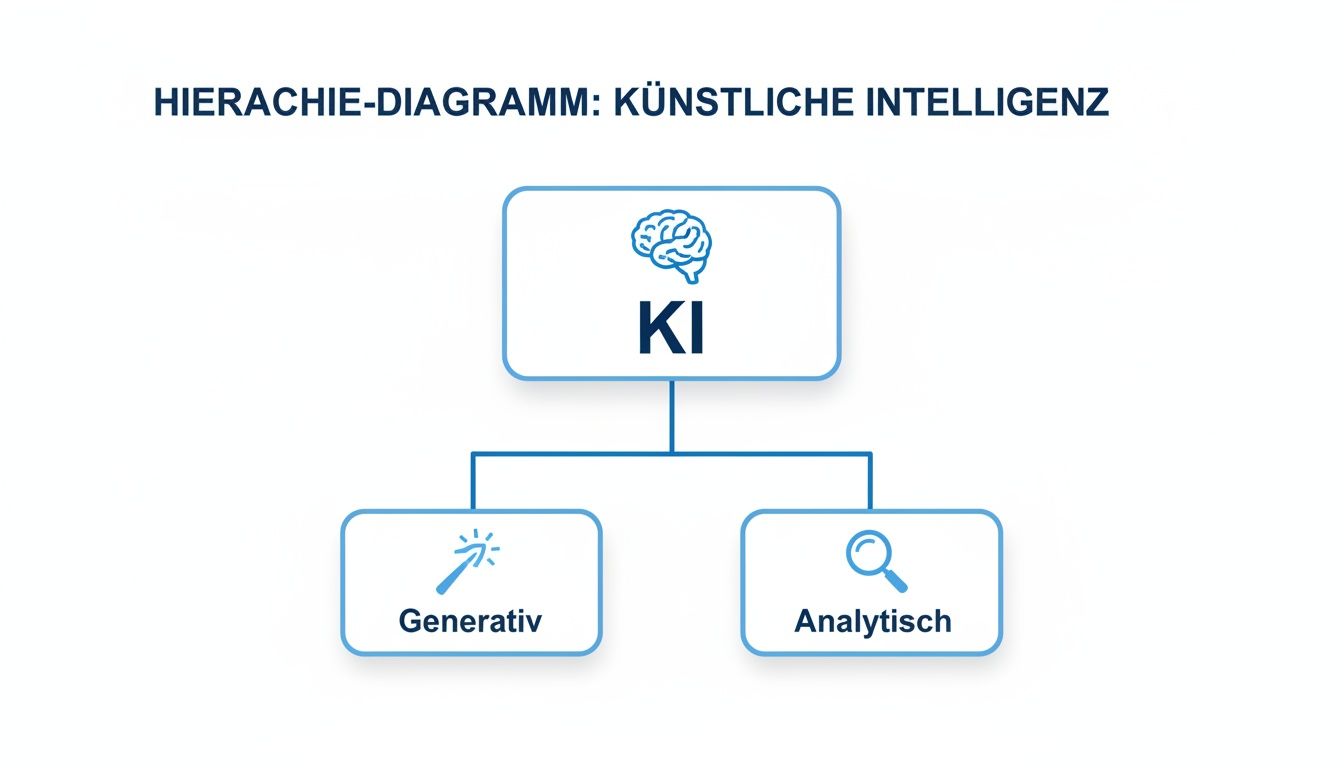
Generative AI is a technology that creates completely new content — text, images or code — on your command. Unlike analytical AI, which evaluates existing data, the focus here is on creating something new. You can start immediately, because you don't have to build your own datasets first.
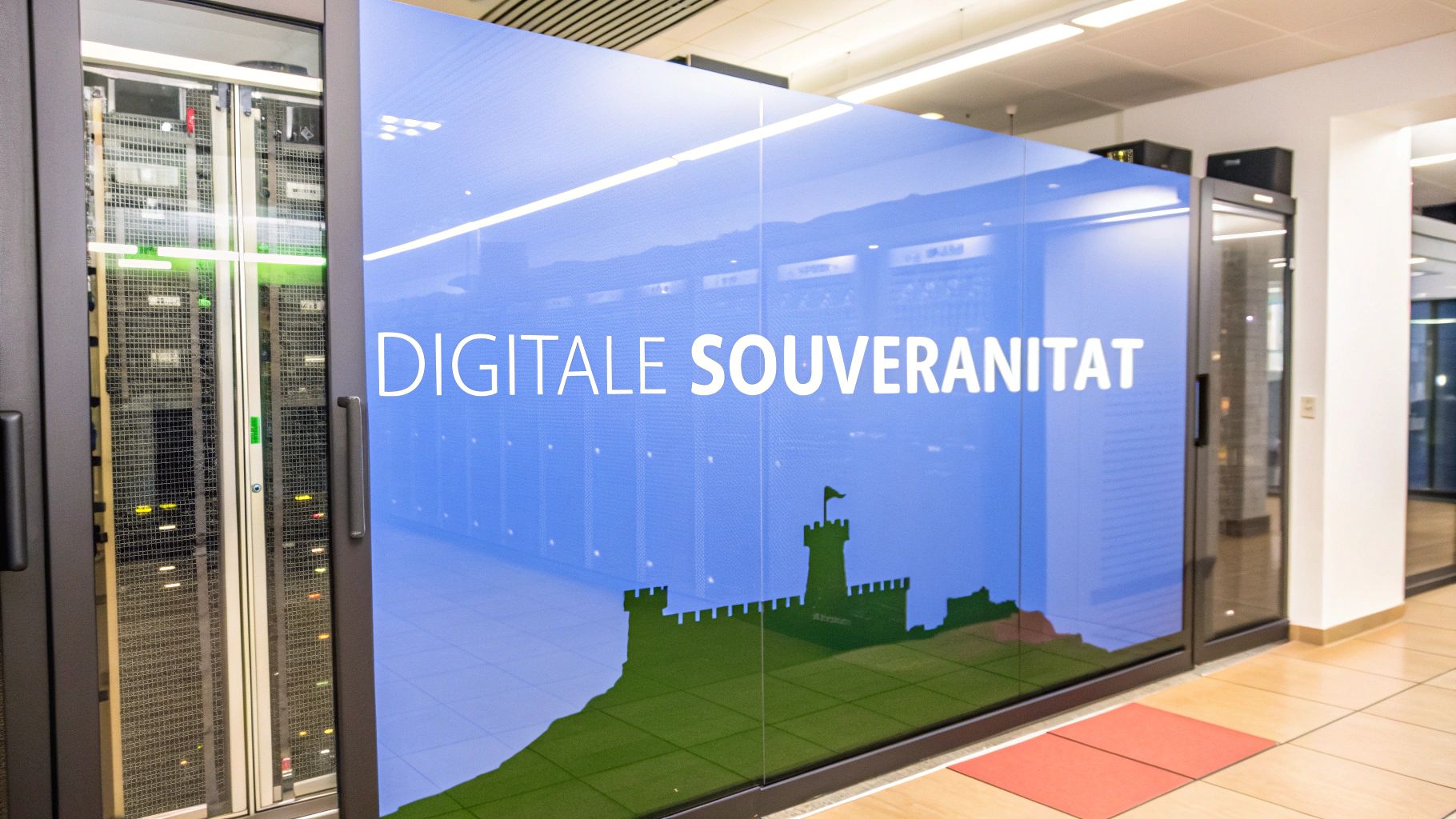
The GDPR as a fortress, not a burden
This is where the desire for efficiency collides head-on with the GDPR. US-based AI providers are subject to the CLOUD Act. That law allows US authorities to access data stored by US companies — regardless of where the servers sit.
Would you put your trade secrets into a safe in a foreign country? Of course not. But that's exactly what you're doing when you entrust your data to a non-GDPR-compliant AI.
European solutions like InnoGPT guarantee that your data stays inside the EU. That way, the GDPR stops being annoying paperwork and becomes a strategic defense wall for your data sovereignty.
The German language advantage: why "AI in German" is superior
A generative AI that learned German from the ground up is more than just a translation machine. It understands the subtle intricacies of our language, which leads to noticeably better results.
- Complex grammar and compound words: long words like "Datenschutzgrundverordnung" and deeply nested sentences are processed correctly.
- Technical terminology: terms from industry, law or medicine are understood and applied precisely.
- Cultural nuance: the AI handles formal ("Sie") vs. informal ("Du") address and hits the right tone in B2B contexts.
A comparison from B2B daily life
Imagine you ask an AI to write a formal email to a managing director.
| AI model | Result of the email |
|---|---|
| Generic US model | "Hey Dr. Meier, check out our cool new logistics tool! It saves you a lot of money. Wanna chat sometime? Cheers." |
| German AI model | "Dear Dr. Meier, I would like to introduce our new tool for improving logistics efficiency. It delivers demonstrably significant cost savings and integrates seamlessly with existing ERP systems. I would be happy to walk you through the benefits in a personal conversation. Kind regards" |
The difference is obvious. The German model hits the professional tone that business expects.
Digital sovereignty as home-field advantage
Just as German companies negotiate more confidently on home turf, the same holds true for AI infrastructure. Anyone working on European servers is playing on their own pitch — with clear rules and no surprises. Using a ChatGPT alternative for Germany secures this strategic advantage.
Solving the shadow-IT dilemma
The core problem in many companies is clear: employees need AI tools to be efficient. Strict bans only push them toward private, insecure accounts — the dreaded shadow IT.
The solution is a company-wide, GDPR-compliant AI platform. It offers a secure and powerful alternative that is so fast and so good that no one needs to fall back on private tools anymore.
InnoGPT's decisive advantage: when a new, better AI model hits the market, it's available on the platform in days, not months.
Your company stays at the technological forefront without losing control of sensitive data. A German AI platform like this closes the security gap created by uncontrolled AI use.
Real-world examples: how to safeguard your workday
What does this look like in practice? Here are two concrete use cases that show how a secure platform like InnoGPT works.
Key-account management: personalised proposals without data leaks
A key-account manager has to put together a complex proposal with sensitive pricing data. Instead of handing that information to an insecure tool, they upload all relevant documents into the protected InnoGPT workspace. The AI turns them into a perfectly worded, personalised proposal in seconds. The confidential data never leaves the secure EU servers.
Project management: efficient minutes without spilling secrets
A project manager wants to document a long strategy meeting that contains confidential information. They upload the audio recording to the secure platform. The AI transcribes the conversation, summarises the most important decisions and creates a to-do list. Hours of manual work are reduced to minutes — and sensitive strategies never leave the company.
These examples show: with the right platform for generative AI in German, it's possible to combine efficiency and security.
Conclusion: keep control of your data
Using a generative AI in German hosted in Europe under the GDPR isn't an option — it's a strategic necessity. You secure not only linguistic precision but, above all, data sovereignty and legal certainty.
By rolling out a central, secure platform like InnoGPT, you end the dangerous game of shadow IT and give your teams the best tools — with no compromises on security.
Try InnoGPT free for 14 days — and keep control over your data.
Frequently asked questions (FAQ)
Related articles
Generative AI Made in Germany: Why InnoGPT Is the Safe Choice for European Companies
Discover the top 6 German AI companies in 2025 for GDPR-compliant generative AI: from innoGPT and DeepL to Aleph Alpha — safe, fast and sovereign.
Create AI Presentations: The GDPR-Compliant Path to Pro Slides
Discover how to revolutionize your work with AI presentations in German. Create GDPR-compliant slides in minutes and impress with every slide.
ChatGPT for Companies? Why European Businesses Need a GDPR-Compliant Alternative
Discover the risks of ChatGPT for companies and how InnoGPT, as a secure GDPR-compliant alternative, makes generative AI power usable for your business.