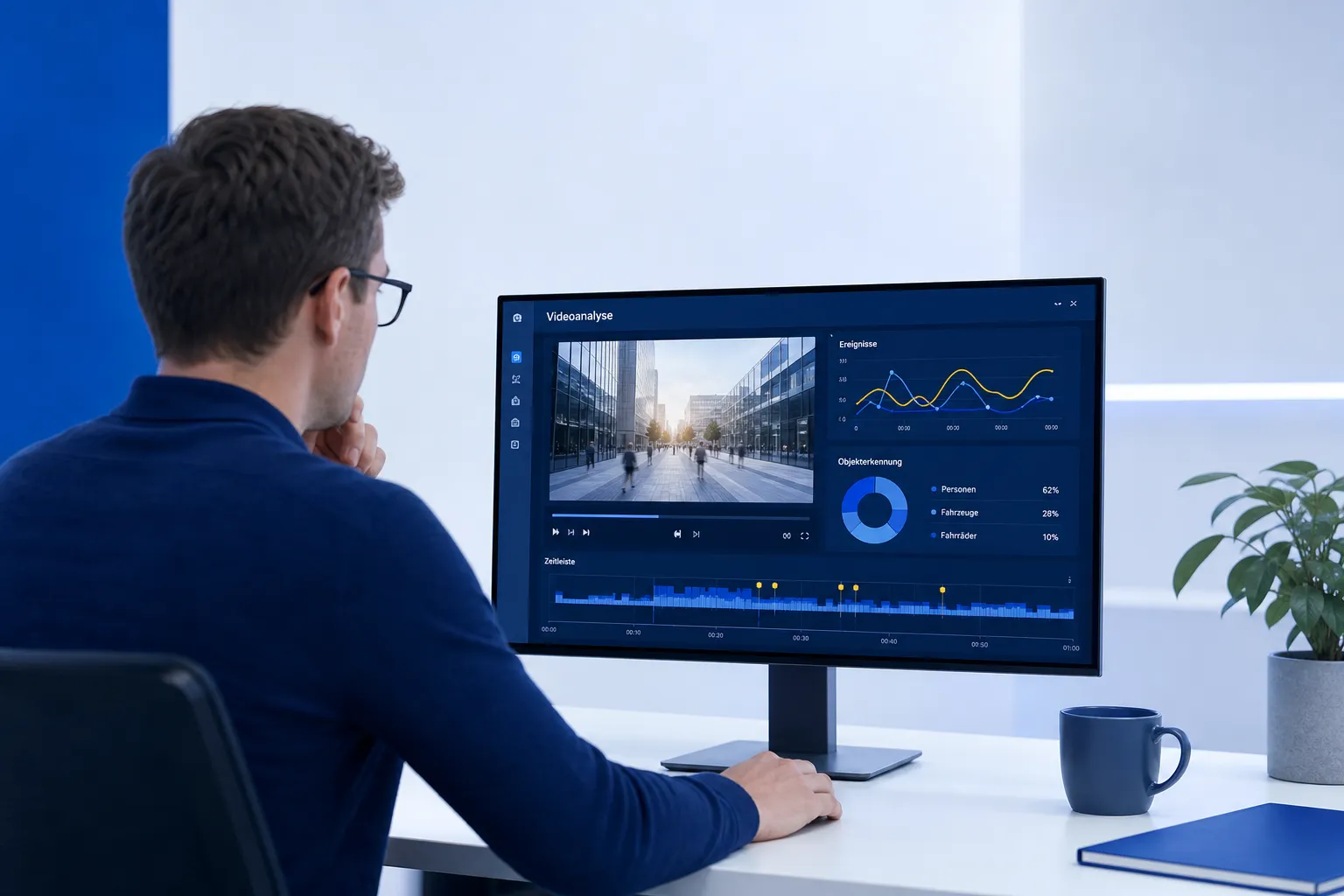
TL;DRIf you want to spot fake videos, check the source, lip movements, sound, and context. In my opinion, most people fail not because of the technology, but because of haste. That's why a five-minute check is often enough.
If you're wondering how to detect fake videos, you don't need a forensic department. A quick and clean test uncovers many fakes, especially when you want to spot social media manipulation.
- First, check the account, old posts, and the upload context.
- Look for mismatched facial expressions, harsh cuts, and asynchronous audio.
- Reverse search the video and compare other uploads of the same scene.
Rule of thumb: If a clip is meant to provoke immediate outrage, double-check it. That's where most deepfakes are found.
For starters, klicksafe, bpb, and Quarks are helpful. If you're interested in safe AI use in business, also read Using ChatGPT – But Safely .
What are Deepfakes?
Deepfakes are manipulated media, mostly videos, sometimes audio or images. They show people in situations that never happened. That's why everyone should learn to recognize fake videos before the clip starts a panic round in the team chat or on LinkedIn.
- Face or voice is superimposed on existing material using AI.
- Typical examples include fabricated statements, false product advertising, or political disinformation.
- Not only celebrities are affected, but also executives, doctors, and job applicants.
In my opinion, the biggest mistake is not sharing, but believing reflexively.
If you want to detect AI fake videos or deepfake videos, you first need the basic principle. The Federal Agency for Civic Education briefly explains how such fakes are created, here at bpb. Klicksafe also shows that deepfakes affect not only videos but also images and sound, here at klicksafe.
How to Recognize Fake Videos
Detecting fake videos is rarely about a single detail. I think it's more like a quick plausibility check, similar to a strange voice message from the 'boss' at 10:43 PM.
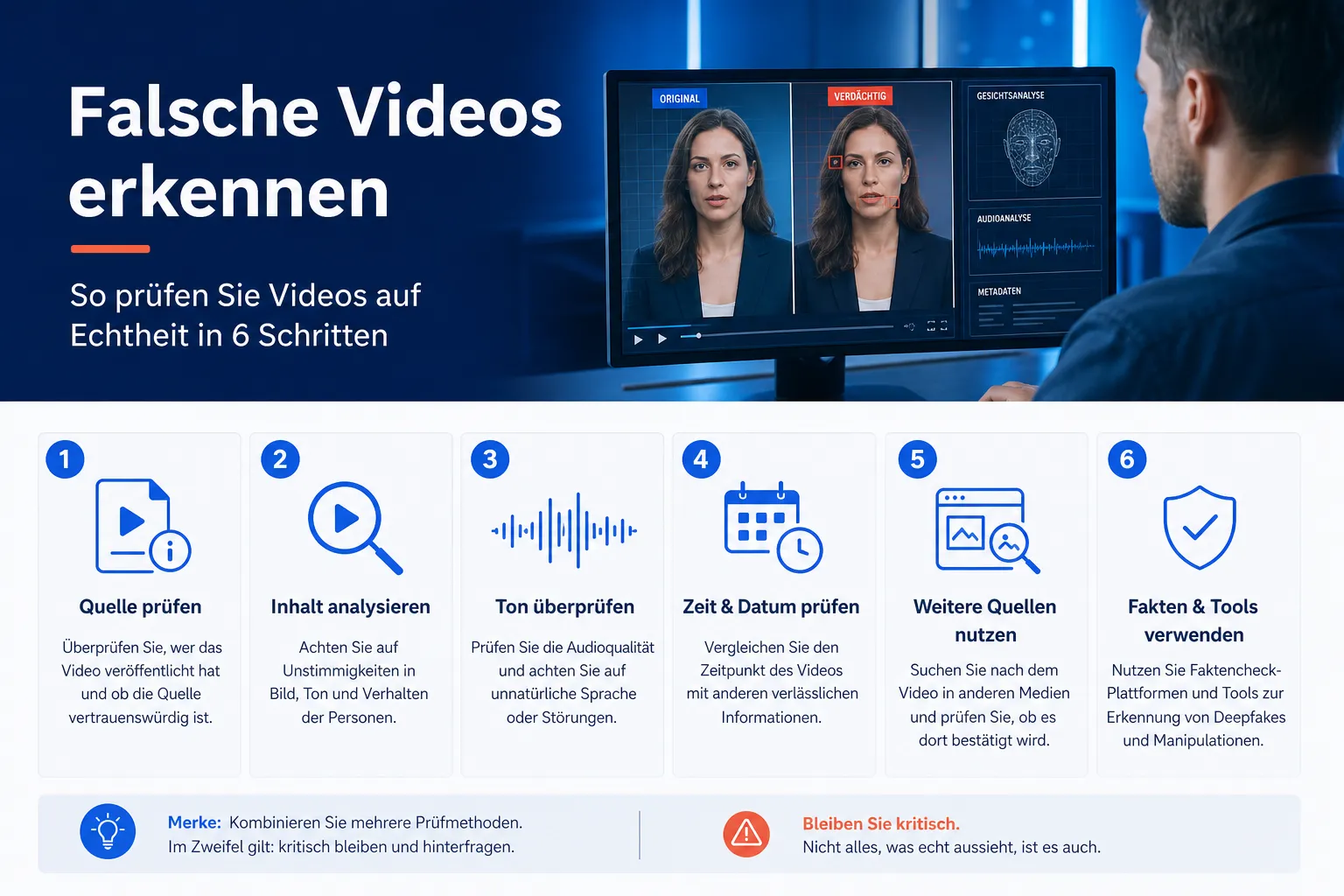
- First, check the source, the original post, the account history, and the upload context.
- Pause the video at several points and watch lips, teeth, blinking, and hairlines.
- Listen to the audio separately, as mismatched emphasis or harsh cuts often reveal a manipulated video.
- Search for the clip on other platforms to identify or debunk a video deepfake.
If a clip is meant to provoke strong outrage, double-check it. Such videos are the ones most often shared without filtering.
If you want to know how to detect fake videos, don't just stare at the image. Klicksafe and Quarks show well why people often struggle to recognize deepfake videos. For teams wanting to use AI safely, our articles Using ChatGPT – But Safely and Is ChatGPT GDPR-compliant? are also suitable.
Countermeasures Against Deepfakes
Detecting fake videos is good. Even better is not falling for them in the first place. In my opinion, every team needs a fixed mini-process for this, otherwise, haste wins again in everyday life.
- No immediate reaction, first check the source, upload date, and original post.
- Second channel, always confirm sensitive statements or payment instructions by phone.
- Team training, so everyone knows how to detect AI fake videos and social media manipulation.
- Tool check, use a fake video detection app or reverse search for single images in case of suspicion, similar to detecting AI fake images.
Rule of thumb: If a clip creates pressure, triggers outrage, or immediately demands money, data, or approvals, stop first, then check.
This also aligns with recommendations from BSI and klicksafe. Those working internally with AI should not improvise rules. Our articles Using ChatGPT – But Safely and Is ChatGPT GDPR-compliant? are also relevant.
Warning Signs for Deepfake Videos
If you want to detect fake videos, don't look for a super clue. Look for small inconsistencies. That's exactly where many fakes are exposed.
- Mouth and audio don't match cleanly, especially with fast consonants.
- Eyes and blinking appear unnatural, either too stiff or frantic.
- Skin, hair, earrings fray at the edges, especially during movement.
- Light and shadow jump between face and background.
- Emotion and context don't match, like a calm voice during supposed panic.
Rule of thumb: If image, sound, and situation don't tell the same story, you shouldn't share the video.
This is how you can detect a fake video without a special lab and without a tinfoil hat. For quick fake video checks, pause, full screen, and a second upload comparison are often enough. Good practice tips are also provided by bpb and klicksafe. In my opinion, the same applies as with the topic Using ChatGPT – But Safely, check first, then trust.
Technologies for Detecting Fake Videos
If you want to check fake videos, gut feeling isn't enough. For thorough checks, you need technology that analyzes image, sound, and metadata.
- Forensic tools look for artifacts, like flickering skin, illogical shadows, or harsh transitions on the face.
- Audio analysis checks if voice, pauses, and room acoustics match the image.
- Metadata checks show if a clip has been newly exported, re-encoded multiple times, or comes from a different context.
In my opinion, one tool rarely reveals everything. Only two or three verification methods together make a suspicion credible.
If you want to know how to detect fake videos, you should therefore combine tool results and source checks. Good overviews are provided by BSI and klicksafe.
A fake video detection app can help with initial screening. Honestly, for sensitive cases like compliance, HR, or press, that's not enough. If you're also evaluating ChatGPT for Business you already know the principle: Check first, then use. The same applies if you want to detect a video deepfake or even AI fake images.
Recognizing Social Media Manipulation
On social media, it's rarely just about the video. The actual manipulation often lies in the surrounding context. A clip seems credible because captions, comments, and editing push you in a certain direction.
- Check the caption: Does it claim location, date, or person without evidence?
- Open the comments: Identical phrases indicate coordinated amplification.
- Search for the clip on other platforms: Often the original appears without false context.
If a video makes you angry in three seconds, check the context first. Manipulated posts aim precisely at that.
If you want to detect a fake video, don't just stare at the face. You also need to see how the post is distributed. Klicksafe and bpb show exactly that.
This also applies in business. If you want to use ChatGPT – But Safely, you need the same discipline in source verification, approvals, and documentation. This way, fake videos can be detected and a video deepfake identified before it causes internal or public damage.
Legal Aspects of Distributing Fake Videos
Forwarding a fake video is not a harmless click. If you could recognize a fake video and share it anyway, it quickly becomes legally problematic.
Depending on the content, personality rights, copyright, and in extreme cases even criminal law apply. This is especially true if a video deepfake attributes statements, actions, or advertising to a real person that never happened. The BSI classification on deepfakes and the advice from klicksafe make it pretty clear why this isn't a meme topic.
- Defamation: False claims about people or companies can lead to warnings and damages.
- Identity theft: Using faces or voices without consent often violates personality rights.
- Business risk: Clips shared at work can cause compliance issues and reputational damage.
Rule of thumb: If you recognize a fake video, you shouldn't share it before the source, context, and authenticity are thoroughly checked.
In my opinion, common sense goes a long way here. Check first, then post. Those working internally with AI should also consider topics like Is ChatGPT GDPR-compliant?.
FAQ
Conclusion
Spotting fake videos isn't just a forensic team's specialty. It's part of regular media literacy. Often, a quick five-minute check is enough to weed out the biggest nonsense.
- Check the source, not just the clip itself.
- Examine the context, such as captions, comments, and upload history.
- Question audio and visuals separately if you want to detect a video deepfake.
If a clip makes you instantly angry, don't share it. Check it first.
Useful sources include BSI on deepfakes, klicksafe, and Quarks. If you're interested in AI risks in business, also read ChatGPT for Business and Is ChatGPT GDPR-compliant?
You might also be interested in
Sources
Workshop How-To: Detecting Deepfakes | Workshop Reels | bpb.de
How to Spot Deepfakes and Protect Yourself
About the author

Tim Geier
Tim & AIHe is a trained media manager working hands-on with AI: Tim helps companies roll out AI securely and GDPR-compliantly, turning complex AI topics into clear, actionable steps.
This article was written by Tim together with AI.
Weekly AI news in your inbox
New models, practical tips & expert insights — free for everyone.
Related articles
AI Social Media Assistant: From Idea to Post in 60 Seconds
Discover how an AI-powered social media assistant revolutionizes your content creation and lets you post in minutes instead of hours.

AI Meeting Minutes: How European Companies Save Time the GDPR-Compliant Way
Use a Teams meeting minutes AI to save time in a GDPR-compliant way. Discover how AI-powered meeting minutes can boost your team's efficiency.

Create a Logo With AI: The Practical Guide to Professional Branding in Minutes
Creating a logo with artificial intelligence made easy: tips, tools and examples for professional branding - start your AI logo today.